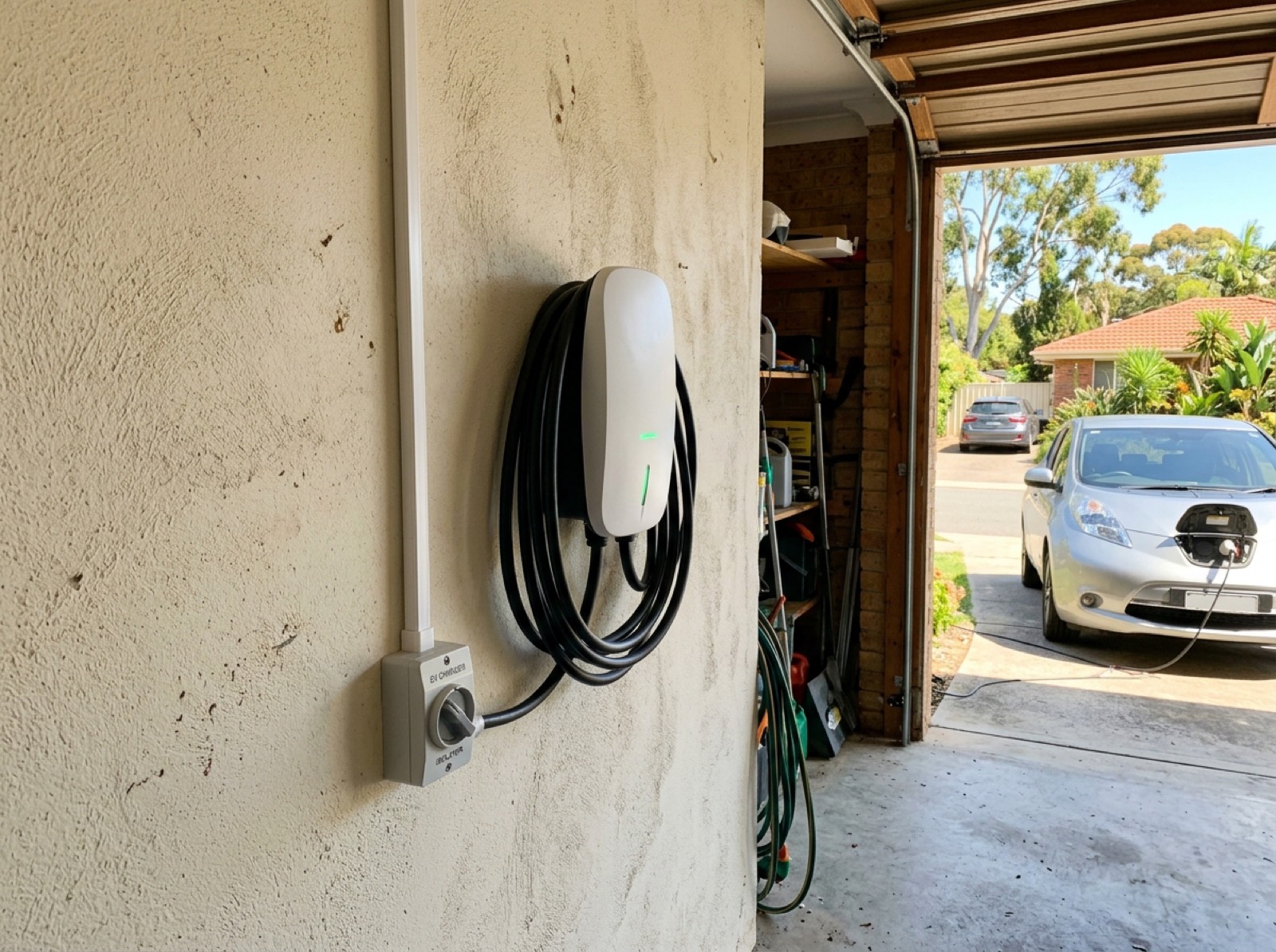
As a rough guide, a home EV charger in Perth usually lands somewhere between $1,200 and $2,500 supplied and installed for a standard single-phase 7kW setup. The charger itself is often $700 to $1,500 of that. The biggest variable is not the charger, it is your switchboard and the cable run. Every home is different, so get a real quote before budgeting.
Most people asking this question have either just taken delivery of an electric car or are about to. The number they have in their head usually comes from a manufacturer's website, and it is usually the price of the charger on its own, not the price of having it working on the wall of your garage.
Here is how the cost actually breaks down, and which parts of it are genuinely variable.
What are you actually paying for?
An EV charger installation is three things: the charging unit, the electrical work to get power to it safely, and whatever your switchboard needs in order to support it.
- The charger. As a rough guide, a reputable 7kW wall charger sits somewhere around $700 to $1,500 depending on brand, whether it is smart or dumb, and whether it has a tethered cable or a socket.
- The installation. Running a dedicated circuit from the board to the charger, with the right protection, typically adds several hundred dollars and climbs with distance and difficulty.
- Switchboard work, if needed. This is the one that catches people out, and it is covered below.
Why does the switchboard matter so much?
A 7kW charger is one of the largest single loads in a house, and it runs for hours at a time. That is a very different demand to a kettle or a television. It needs its own protected circuit, and that circuit needs somewhere to live.
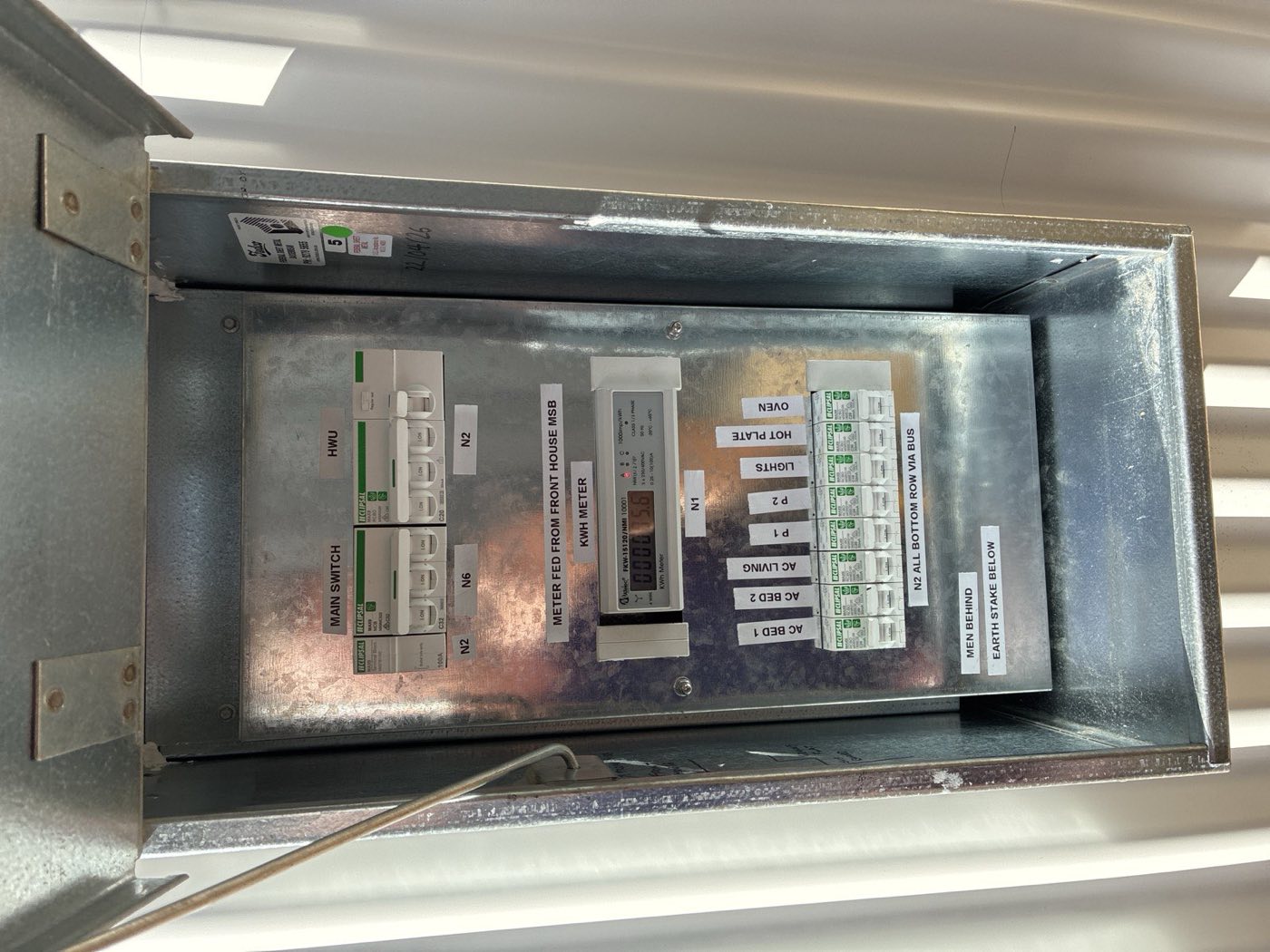
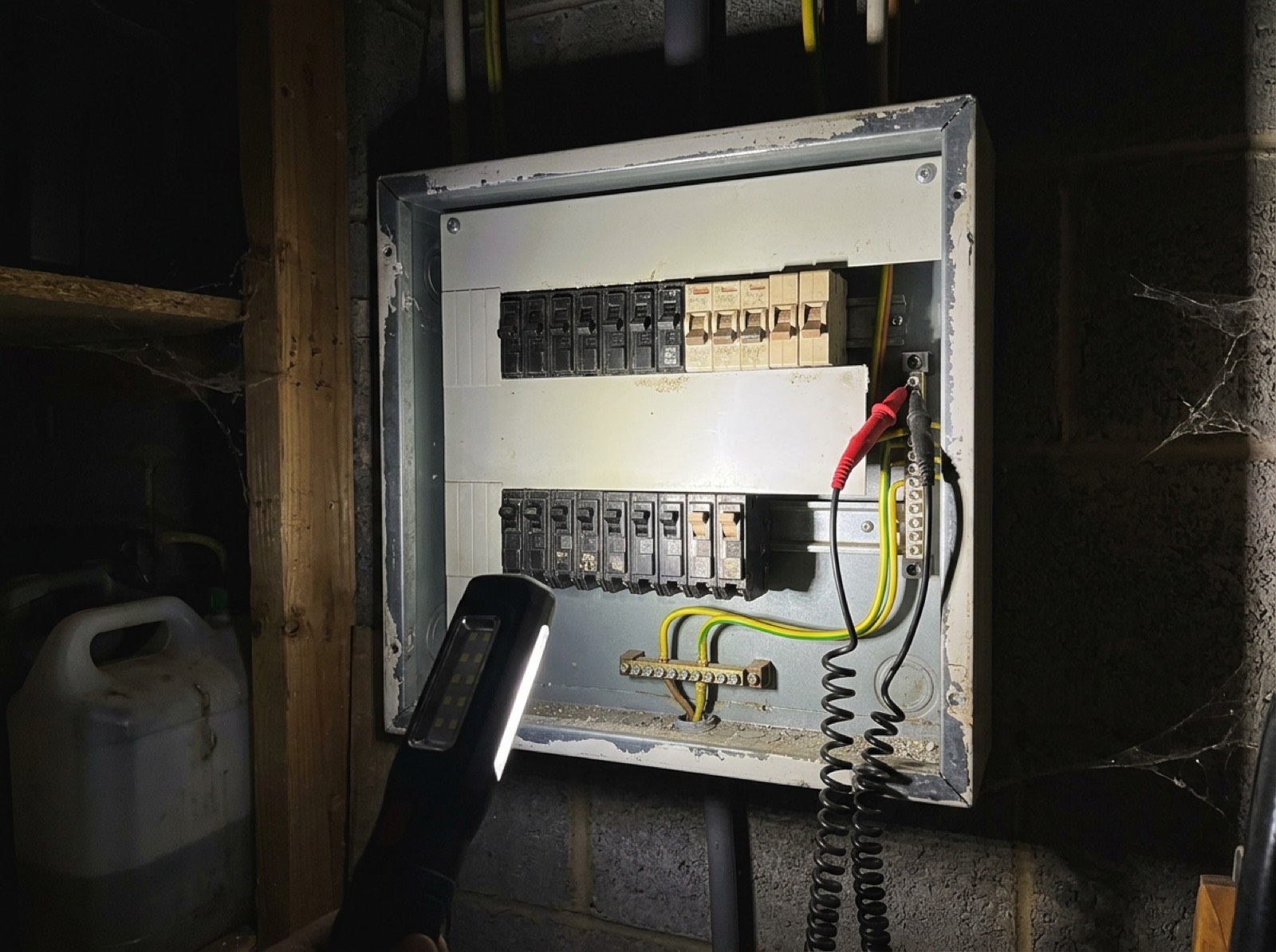
Plenty of homes along the Perth coast were wired before anyone was charging a car at home. If your board still has ceramic fuses, has no spare capacity, or only has safety switches on some circuits, it will need work before a charger can go in. That is not an upsell, it is the reason the job is safe.
This is why a proper EV charger quote always starts with a look at the board, and why the honest answer to "how much" is sometimes "let me see your switchboard first". If it does need attention, a switchboard upgrade is quoted alongside the charger so you see the whole number before you commit, not halfway through the install.
What makes one quote higher than another?
- Cable run. A charger on the wall directly behind the switchboard is a short job. A charger at the far end of a detached garage is not.
- Single-phase or three-phase. Most homes are single-phase, which comfortably runs a 7kW charger. Three-phase allows faster charging but only if your property already has it.
- Switchboard condition. The single biggest swing factor.
- Mounting and access. Brick, render, limestone and cavity walls all behave differently, and roof space access varies enormously by house age.
Is a faster charger worth paying for?
For most households, no. A 7kW charger adds roughly 40 kilometres of range per hour, so an overnight charge covers far more than a typical day of driving. Paying for more speed usually solves a problem most drivers do not have. There is more on this in our guide to choosing between 7kW and 22kW chargers.
What about the cheapest option?
Charging from a standard powerpoint works, slowly, and it is fine occasionally. As a permanent arrangement it is asking a general purpose circuit to carry a heavy load for eight hours a night, which is not what it was designed for. That is the case for a dedicated charger, quite apart from the convenience.
Getting a real number
The ranges above are general market guidance, not a price list. The only way to know what your install costs is for someone to look at your board, your parking spot and the run between them. Oliver covers the coastal strip from Fremantle up to Ocean Reef, and quotes are free with a fixed price in writing before anything starts. Get a quote and you will know the real number rather than a range.
Want a real figure for your job?
Every place is different. Send through what you need and Oliver will give you a fixed price in writing.